
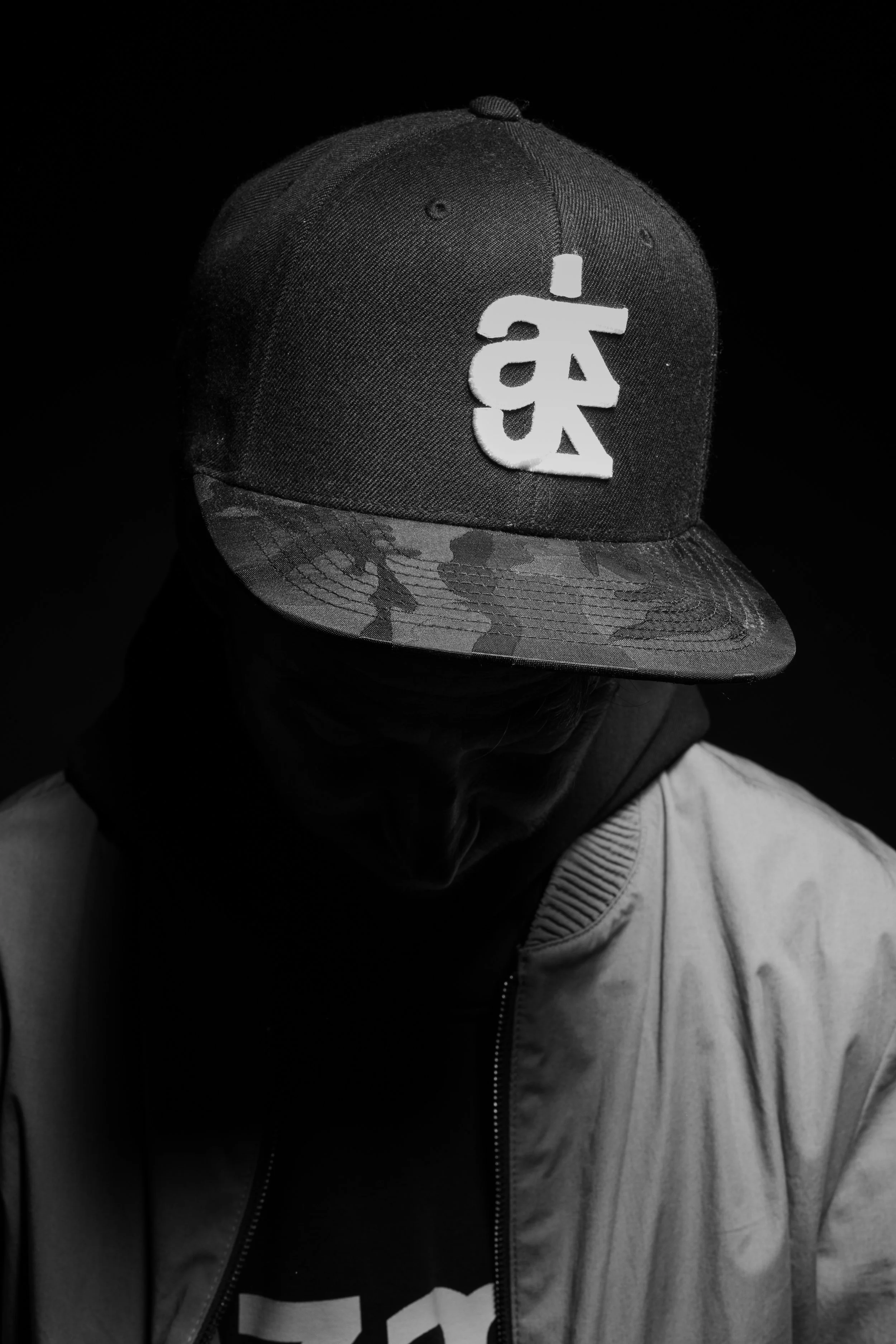
Unfold: RICHARD SPAVEN
RICHARD SPAVEN HAS SPENT A CAREER AT THE POINT WHERE PROGRAMMED RHYTHM BECOMES PLAYED FEEL - WITH FLYING LOTUS, JOSE JAMES, LOYLE CARNER AND HIS OWN RESTLESS SOLO WORK. ON LIGHT OF DAY, HIS NEW ALBUM, THE QUESTION IS WHAT HAPPENS AFTER THE MUSIC LEAVES HIS HANDS: HOW A PRIVATE TAKE SURVIVES RELEASE, HOW INFLUENCE STAYS FIRST-HAND, AND HOW ATTENTION CAN BE GIVEN WITHOUT BEING SEIZED. NEIL HOUSEGO TALKS WITH HIM ABOUT LOYLE CARNER'S CAMERA, SOURCE DIRECT, FIRST-HAND ROOMS, A BROKEN COLLARBONE, AND THE RHYTHM AT THE EDGE OF A DECISION.
I’m sat with Richard Spaven over Zoom, we turn our attention to Glastonbury last year. The detail he keeps returning to is not the size of the crowd, the broadcast, or the stage setup. It is the camera in Loyle Carner's hand.
Ben, as Spaven and the band call him, had it onstage. If he looked toward Finn, the keyboard player, Finn went up on the screen. If he turned across the band, the crowd saw the band through his looking. Spaven calls the idea beautiful. The frontman had the gaze of the field and passed it on.
For a few seconds, the screen showed what a band normally keeps to itself: the private traffic of live music, the glances, the dependencies, the cue passing from one body to another while the playing is still happening.
Spaven has spent much of his working life there. Not in the job title, drummer, which tells you almost nothing. In the work underneath: watching, catching, adjusting, keeping the floor solid enough for somebody else to move as if no floor had to be built. He talks about Stuart McCallum, the guitarist on Light of Day, that way. Stu is "a nightmare", he laughs, then almost immediately "such a G of a musician, harmonic genius, lovely guy, and a great listener." Then the line lands: "You need people who can listen while they're playing." Listen while: hands moving, hearing open; your own part still alive, everybody else's part still entering.
One of the biggest stages of Spaven's life felt, to him, "like I was doing an intimate show at the Vortex." He could look around and take the scale in, but the size had not turned the band into separate figures. The audience "played their part so beautifully"; the set was on the edge technically, with "an element of fortune in it." Afterwards Spaven told the band, "we robbed the bank."
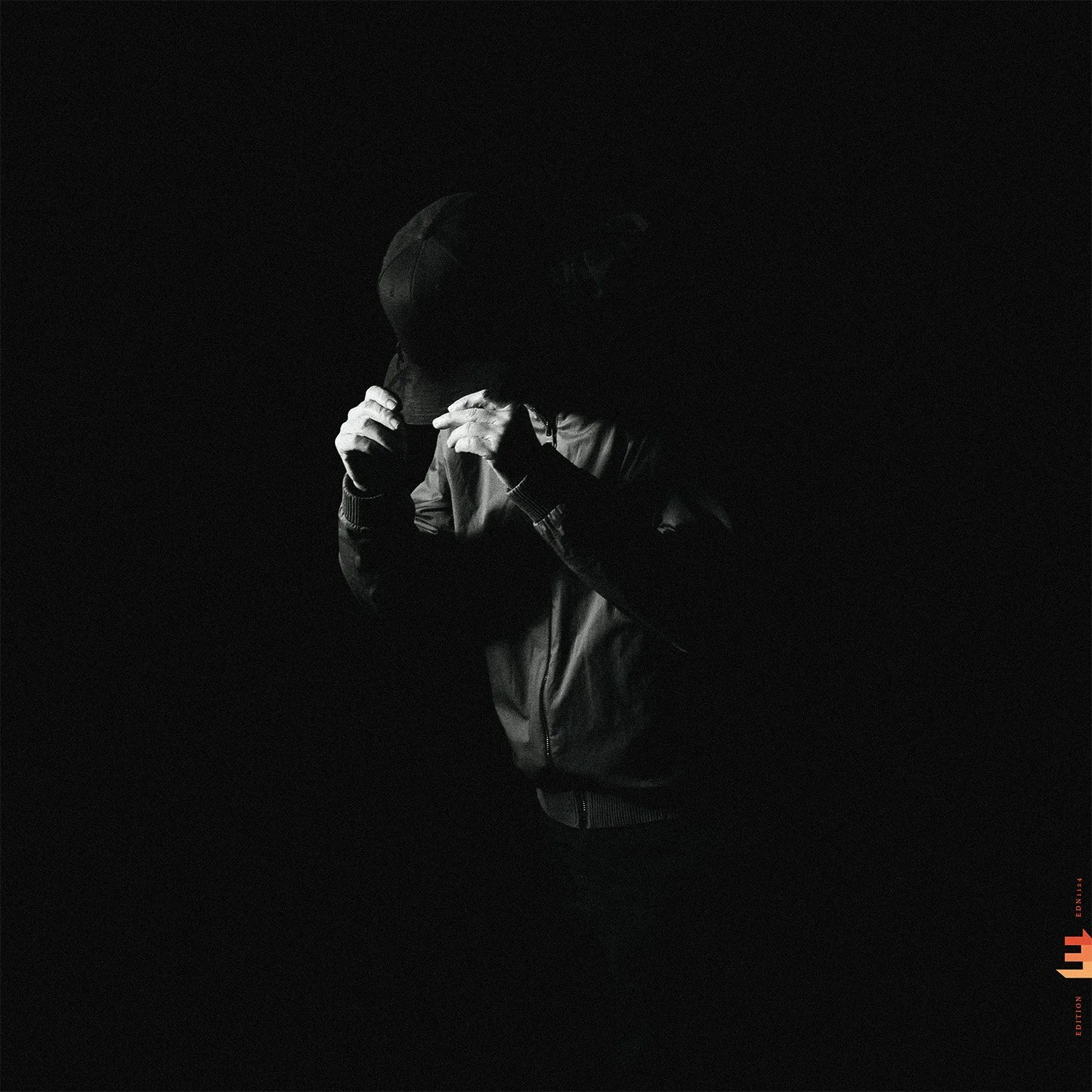
Light of Day now has to leave the place where he makes those decisions. A record made in private becomes label copy, release date, interview, post, review, shorthand. Making music is the part Spaven trusts. "I don't keep any takes," he says. "I just delete everything until I know it's the take." He also says he needs to feel an emotional connection with his own music: "If you haven't been through that process with your own music, how can the listener be expected to feel a connection?" The take has to carry the charge before anyone else gets near it. Actually releasing the music is different though. "You feel exposed." Other people get to have their takes.
He wants the response. He says the reaction to the record so far has given him a good feeling. But when the feeling has to promote itself, he flinches from the posture. He had told Dave Stapleton, Edition's founder, that the album felt really special, then describes wanting it to land "without having to spoon-feed the fact that it's my special album, I mean who cares?"
Spaven had been exploring and remembers telling Graeme Blevins that he’d love to make a flute album, then correcting the joke while it is still in the air: "It wasn't as a joke, really." The line matters less as a literal description of the album than as a sign of how the writing was changing around other players. With Oli Rockberger on piano, he wanted to "get into the cracks of it a bit more", to open the harmony from inside. When he tells Stapleton, tongue in cheek, that this is his jazz record, the same little reversal happens: "And I think it is, really."

It is also, he says, his "most drummy" record. Sections where the density reaches "the full range of a drum solo" while remaining inside the composition; places where he is "giving less fucks about the grid, or mistakes" and still keeping the groove clear enough for everyone else. The drums get more room to move inside the writing. On "Bunny Bread", which has what he calls a "strong West London, bruk aesthetic", the kick dodges the obvious square, the snare shaves the count, the groove steps slightly wrong and makes the straight line feel lazy. "The beat is suddenly so focused, but harmonically it's still so broad," he says. "It's a bit of a spine-tingler." He wrote his favourite chords there. Memory of scenes, broken beat, drum and bass, reaches through his hands.
The first time I nearly met Richard Spaven, neither of us knew it. A Sunday at the Blue Note in Hoxton in the middle of the nineties. Somewhere in that same world was a young drummer who would spend the next thirty years making use of those nights without turning them into costume. I was there for the same reason.
The second time was Sheffield. A Wednesday at the Lescar, a good ten years ago. I was in the venue when my wife rang - our daughter was ill and asking for me - and I drove home before he played a note. When I tell him this, he gives me the working fact: "It's hard to get a gig at the Lescar, it's so busy."
Lescar is the small near-miss: a name on a bill, a phone call, a set I did not hear. The Blue Note is the larger one, because it is where the conversation starts to test my own memory. When drum & bass enters the call, the first rush of detail is mine: Source Direct on Metalheadz, Photek's original releases, Secret Liaisons, the old documentary where the image of a BMW seems to summon "The Crane" and the amen breaks come in as if everything around them has been cut to pieces, Phil in the bedroom studio with headphones on, asking if you want to see how loud he can take it. The names, the cars, the titles, the remembered shocks start doing the ugly little work of proof. Spaven does not compete with the list. He listens for what those records were made under.
Black Market Records comes up too: the D'Arblay Street shop in Soho, ground-floor counter, basement pressure, stock moving by rumour as much as by category. I remember the feeling of everyone else knowing every twelve-inch before I had even caught the title; the embarrassment of bluffing confidence around music you loved but could not yet command. Spaven recognises it immediately. "I've done that before," he says. "Pretend to know what it is." His memory is not golden-age piety. "It was intimidating," he says, all that energy, full-on, exciting. "It stayed with me, all that stuff." The music reaches him with the bruise still on it.
Those early Photek drums - UFO, Rings Around Saturn, The Seven Samurai - still sound as if someone cut the breakbeat down to its last working nerve. Tiny snares. Dry kicks. Space so hard it becomes part of the rhythm. When the music gets cleaned up, straight out of a laptop, Spaven says it does not sound as good. Then: "It got easier - you could do more, and with that the decision-making, the constraints, they just lost that magic." Difficulty had taste. Limitation made choices audible. The old machines did not contain soul, as if soul were a preset you could misplace; they put you somewhere tight enough that the next move mattered.
The Blue Note Sundays were where drum & bass was still scarce enough to require your presence: Metalheadz at Hoxton, mid-nineties, before the music had been flattened into a style summary. Spaven remembers it as almost absurd now, "the only place you could go to hear that stuff." The information was the volume, the system, the fact of having to be there. Co-Op gave him something else: West London, broken beat, the rhythm tilting away from the obvious count. He says he absorbed it "as a fan", not as "a train-spotter with my notebook, writing the beats down and running home to play them on kit." The notebook arrives after the event. The fan is still in it.
Years later, when he wonders how anyone would start a scene now, he does not reach for a platform or a strategy. "You've almost got to switch the internet off and affect people," he says. Sound first, then the look of belonging to the sound. Once people turn up second-hand because it seems cool, he says, it is already over.

The word he settles on is "first-hand." "It's hard to come out as a jazz drummer these days and say, 'I'm authentic,' because you can't be." Authentic hangs there for a second, too large for the sentence, and then he leaves it alone. First-hand has less shine. It has fingerprints.
The copybook version of influence starts stripping the fingerprints off. Elvin Jones reduced to a lick. Dilla reduced to a drag behind the beat. A pressure of life and place converted into a transferable move. I start making that argument and he gives the cleaner sentence: "It's out of context, yeah." Later he puts the working rule another way: "The why - why are you playing this - supersedes what you're actually playing." He says the why has to be "locked in." Not admired from outside, not declared afterwards. Locked in, like a mechanism catching before the bar turns over.
The body tests that before the vocabulary does. He likes patterns that feel "backwards in my body": start where the hand does not want to start, hold the pulse while the limbs argue, make the machine's wrongness pass through muscle without smoothing it into correctness. A sampler can play a rhythm without ever experiencing the problem of it. Spaven wants the problem. He does not want to reproduce what a machine did. He wants to "embellish and speak the language around the language."
You can hear the same exchange in the Carner work. On "horcrux", from Carner's hopefully !, Spaven says there is "a straight-up D&B beat", and Ben likes rapping over things that are not straight-up hip-hop. On Light of Day, the writing also begins mid-gesture. "Finders", with Wildchild, comes out of improvisations with Rockberger, pieces of charge lifted and worked from. "You seize upon an energy," Spaven says. Not a blank page, then command. Something happens inside the playing, and the job is to catch it before it cools.
Then, for six and a half weeks, the kit is out of reach.
During the writing, Spaven broke his collarbone falling off his bike. He tells it lightly enough - going "a bit nuts", getting "a bit tetchy" - but the lightness does not make it small. A drummer without drums is not only a player without an instrument. One of the ways the world answers him has been taken out of reach.
Rockberger sends material into that quiet. Spaven cannot answer it on drums, so he answers by moving it: sampler, chops, transpositions, harmony shifted by hand in the machine. That becomes "Out of the Quiet", the first single and the track that opens Light of Day. You can hear the modulation, he says, because he was transposing it in the sampler. The title stops behaving like atmosphere. Quiet is not calm here. It is the interval in which the usual route has closed and another one has to be made by touch.

When the body comes back, he does not return by making the kit tidy. He takes the damping off. Tunes it up. Lets the toms ring into each other. The sound gets less obedient, more liable to spill across the next bar. Asked if that was a nightmare to record, he more or less says yes - but you can work on it later. "It's the kit just doing its thing - let's accept that and lean into it." The man who deletes every take until one survives does not begin by killing the excess. He lets the sound make its claims first. Judgement comes after contact.
It is the move Ben made with the camera, turned the other way: attention pointed at the thing itself, and something returned in proportion to it. Spaven talks about the work as something already underway before he sits down. "There's no start line every time you sit down; you're already halfway in." That could sound punishing, but in his mouth it is not a productivity ethic. It is a description of being claimed by the work before you have organised yourself into the person who is ready for it.
The takes leave his hands; other people will look at it, praise it, misunderstand it, need it, miss it, use it. He will not be standing by for the verdict. He is "still trying to achieve something I haven't achieved, reach somewhere I haven't reached" - and that, not the release, is "what gets me down the studio on a Sunday morning." The next decision is already in the air. There is more to be had from it.
Light of Day by Richard Spaven is out now on Edition Records
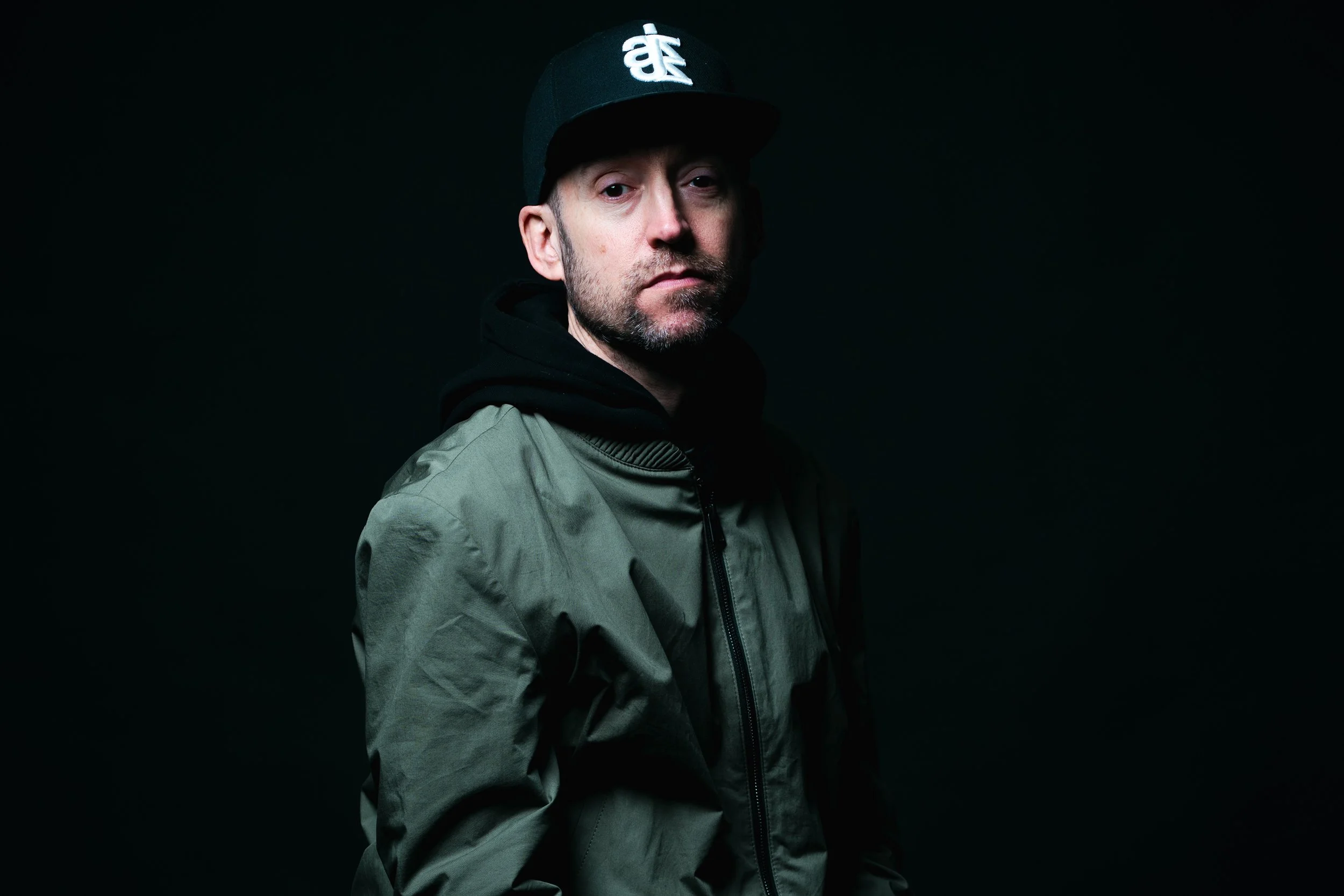
Photography by Dave Stapleton